Welcome to the Mathematical World!
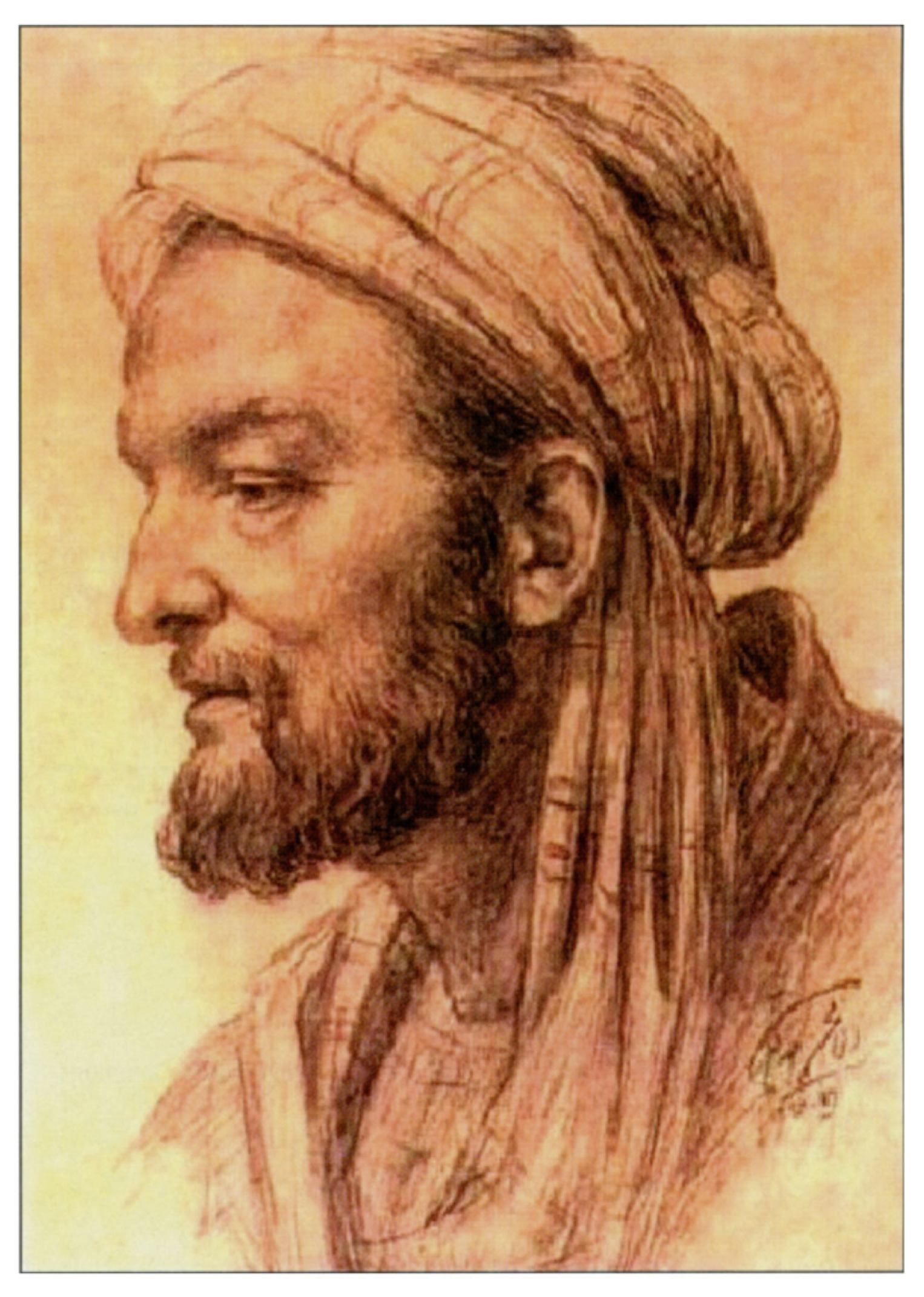
Ibn Sina (Avicenna)
Polymath of Philosophy, Medicine, and Natural Science
Ibn Sina (980 – 1037 CE), known in the West as Avicenna, was a Persian polymath whose achievements span
philosophy,
medicine, astronomy, mathematics, physics, and more. Born near Bukhara under the Samanid dynasty, he
became
a
renowned physician and philosopher, authoring over 450 works—approximately 240 survive today.
The Book of Healing (Kitāb al‑Shifāʾ, c. 1027 CE) is a vast encyclopedia covering logic,
natural
sciences, mathematics, and metaphysics, while his Canon of Medicine (Al‑Qānūn fī al‑Ṭibb,
1025 CE)
became the standard medical reference in both the Islamic world and medieval Europe.
Astronomy and Mathematics
Ibn Sina made important contributions to mathematical astronomy and optics. He clearly distinguished mathematical astronomy from astrology, and critically examined Ptolemaic models when they contradicted observed phenomena.
Notable achievements include:
- Reported observing a possible transit of Venus or a sunspot on May 24, 1032, using it to argue that Venus can come between Earth and the Sun.
- Described the supernova SN 1006, noting how its brightness varied over months — one of the earliest known supernova observations.
- Devised precision instruments for angular measurements, anticipating the vernier principle, for determining celestial longitude based on lunar culmination.
Philosophy of Science and Physics
In The Book of Healing, Ibn Sina promoted a scientific method combining observation, rational logic, and experimentation. He advocated deriving universal principles from empirical data and reason — a key development in the evolution of the scientific method.
He introduced a concept similar to inertia, proposing that motion continues due to an imparted mayl (impetus), which only ceases due to external resistance. This idea foreshadows Newton’s First Law of Motion. In modern terms, he essentially stated:
\[ \text{If } F = 0, \text{ then } v = \text{constant} \]
This was centuries before Galileo and Newton formalized it.
Medical and Metaphysical Works
His Canon of Medicine was a comprehensive synthesis of Greco-Roman, Persian, and Indian medicine. It introduced:
- Systematic clinical trials
- Diagnosis through observation
- Quarantine for infectious diseases
- Descriptions of ailments like diabetes, tuberculosis, and cataracts
In metaphysics, he formulated the doctrine of emanation—arguing that all beings proceed from the Necessary Existent (God), through a hierarchy of intelligences. This model heavily influenced both Islamic philosophers and later Scholastics like Thomas Aquinas.
Logical and Epistemological Innovations
Ibn Sina developed advanced theories of cognition, introducing the concept of an Active Intellect—an immaterial agent enabling humans to grasp abstract knowledge. He also proposed the famous Floating Man thought experiment:
If a person were created fully formed but suspended in air, cut off from all sensory input, he would still be aware of his own existence.
This was an early argument for self-awareness as independent of sensory perception, and thus for the soul’s immateriality.
Legacy and Influence
- Unified Greek, Persian, and Islamic intellectual traditions into one philosophical system
- Helped lay the groundwork for modern logic, scientific reasoning, and metaphysical inquiry
- His Canon remained the cornerstone of European medicine for centuries
- Inspired key figures like Averroes, Aquinas, and Roger Bacon
Ibn Sina remains one of the greatest thinkers of the Islamic Golden Age, symbolizing the synthesis of philosophy, science, and medicine in medieval intellectual history.

All rights reserved by the Mathematical Unity
Contact: +8801400044645
Email: mathematicalhorse1453@gmail.com
Our Discord Server: Mathematical Unity [Ulus Riyadiyat]